How Coinmico measures crypto prices
A plain-language guide to the trades, outlier checks and fallback labels behind Coinmico's reference prices.
What You Will Learn
- Coinmico groups trades by venue, computes a volume-weighted price for each and combines agreeing venues by traded value.
- Outlier checks, freshness labels and a separate on-chain calculation help keep one thin or stale market from speaking for an asset.
- Market capitalisation and volume are derived from Coinmico's own indexed prices, trades, swaps and stored supply inputs.
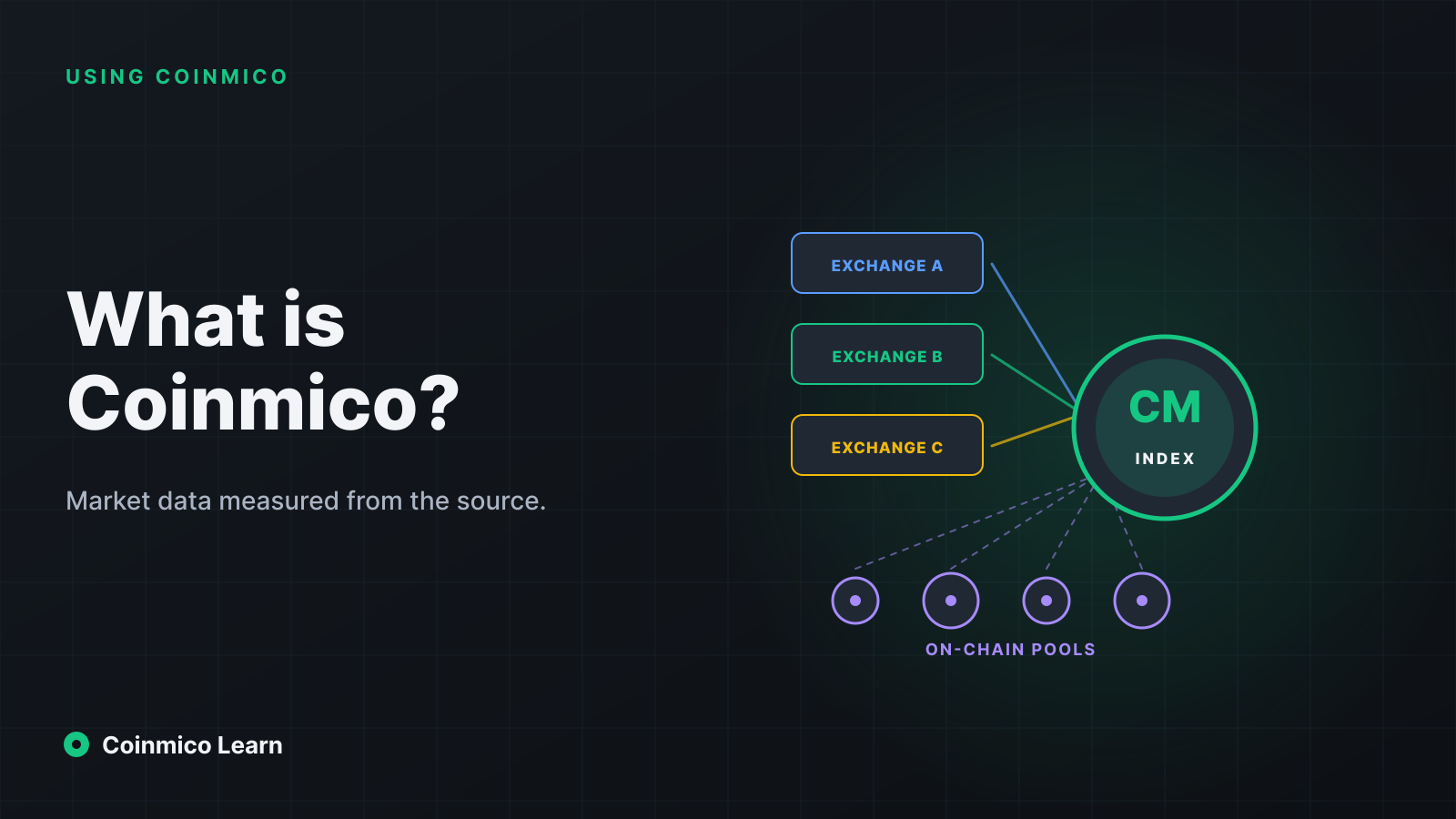
Coinmico measures prices from the trades and on-chain swaps its indexers collect. A page does not ask another aggregator for a finished price and copy it into Coinmico's index. This article summarizes the steps; the full Coinmico methodology documents the sources and edge cases.
How Coinmico builds a reference price
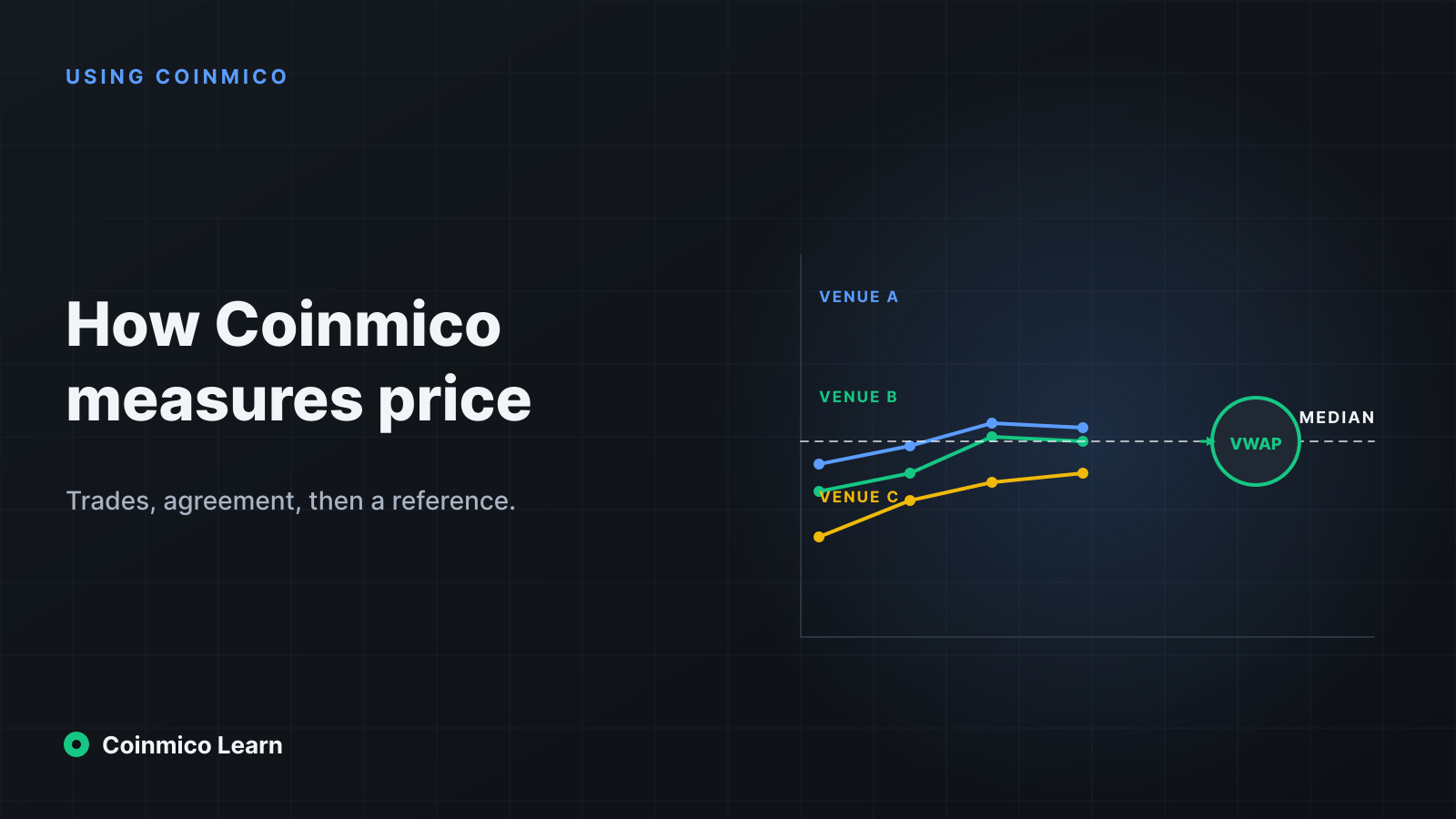
For a listed asset, incoming trades are grouped by venue into short rolling windows. Each venue contributes a volume-weighted average price, so a larger trade has more influence than a smaller print. Spot and perpetual markets are kept separate because a perpetual contract can trade at a funding-driven premium or discount.
Coinmico compares venue prices with a cross-venue median. Venues more than 2% away from the median are normally excluded as outliers. The remaining venues are weighted by traded notional, which gives deeper markets more influence. The index settles frequently, and its published price carries information about the venues behind it, confidence and freshness.
An asset with no fresh exchange trades may use a separate pool-based reference price. Coinmico calculates each pool's volume-weighted price from decoded swaps, removes pools that disagree too far with the cross-pool median, then weights the remaining pools by traded value. This pool calculation only fills a gap; a fresh venue price takes precedence. If the available evidence is too thin, the price is not invented.
If an asset has stopped trading, a labelled order-book fallback may be available. A quote is not turnover, so that fallback does not create 24-hour volume. The page identifies the source so readers can distinguish it from a trade-based index price.
How volume and market cap are calculated
Coinmico's spot volume is the traded value it observes in exchange markets and decoded on-chain swaps. It is built from stored candles over the trailing 24 hours; perpetual and futures turnover is reported separately rather than counted as coin spot volume. The trading-volume lesson explains why a venue's own reported figure is not the same as observed trades.
Market capitalisation is calculated from the measured reference price and the circulating-supply input held by Coinmico. Supply and other imported project metadata can come from public sources; the site labels fields that it did not measure. A missing time window or metric stays blank when Coinmico cannot support a reliable value.
The practical takeaway is that Coinmico publishes both a number and context about how it was obtained. Read the What is Coinmico? introduction, compare the approach with other services in Coinmico vs CoinGecko vs CoinMarketCap, visit the Coinmico app guide, or check current coverage on /about.
Every figure here is measured by Coinmico across the venues and chains we index. See our methodology.